


Game reference
Blackjack
A live blackjack reference listed in the source catalogue.
Provider named in the source catalogue: Smartbet.
Source: Jackpotter game catalogue.
Read the source version’s current rules. This reference does not establish availability, game configuration or payout terms for another service.
Return to the game collection →Numbers on a live table look familiar, yet each game attaches its own meaning to them. A total that wins in one room can lose in the next, and a card already visible is not always the finished settlement.
Product examples here are independent of current Melbet inventory.
Melbet is an India-friendly casino and sportsbook with live dealer tables, UPI or Paytm deposits and INR support. 18+; T&C apply. Background sits at this independent information page.
Blackjack Card Values
Eight standard 52-card decks feed this table. Cards 2 to 10 carry face value, J, Q and K count ten, and the Ace counts one or eleven. The aim is to beat the dealer without passing 21. A first two-card Ace plus any ten-valued card is Blackjack, an outcome kept distinct from reaching 21 across three cards. A player bust ends that round at once, and the dealer draws through 16 then stands on 17 or above in this exact product. Hit, Stand, Double Down and Split appear as listed actions.
Take A, 5 and 9. The Ace reads as one, giving 15. The same Ace beside a King gives 21 on two cards, which the rules treat differently from a three-card 21. That distinction matters because the two-card version is named Blackjack while the three-card version is simply a total of 21. SA Gaming’s Blackjack rules supply these definitions.

Baccarat Last-Digit Scoring
Two hands, named Player and Banker, are dealt from eight standard decks in the order Player, Banker, Player, Banker. Ace equals one, cards 2 to 9 keep face value, and ten, J, Q and K equal zero. Only the last digit of each hand’s sum survives. Player 7 plus 8 totals 15, read as 5. Banker 9 plus King totals 9, a natural that ends drawing at once. Final totals are compared, nearest 9 wins, and equal totals make a Tie where the main Player and Banker wagers push.
A first-two-card 8 or 9 is natural; otherwise third-card rules govern further draws. The last-digit step is what separates this game from ordinary addition: a hand summing 15 is not stronger than one summing 9, it is weaker, because 15 collapses to 5. The SA Gaming Baccarat page sets out this arithmetic.
Roulette Single-Zero Wheel
This wheel holds pockets 0 to 36, and one ball result settles every position covering a single number or a defined group. The named rule table lists straight, split, street, corner, six-line, column, dozen, red/black, odd/even and low/high. Zero belongs to none of the outside groups: not red or black, not odd or even, not 1 to 18 or 19 to 36. Suppose the ball lands in 26. That pocket is even, black and inside 19 to 36, so those three outside positions settle as winners.
Now suppose the ball lands in 0 instead. Every outside group listed above fails at once, because zero sits outside all of them. The layout has not changed between the two spins; only the pocket has, and the pocket alone decides which groups are covered. SA Gaming’s Roulette rules describe the layout and groups.

Sic Bo Triple Exception
One shake uses three dice, each showing 1 to 6, and the result total is their sum. Small covers 4 to 10 and Big covers 11 to 17, yet both exclude triples; Odd and Even also lose to any triple. A specific number pays according to whether it appears once, twice or three times, while a pair means that number on at least two dice. The provider’s Specific Double label covers two different numbers and differs from its same-number Pair, so the labels matter.
Consider 2, 2 and 5 for a total of 9, then 3, 3 and 3, also 9. The second arrangement is a triple, so Small fails despite the total sitting inside 4 to 10, and Odd fails despite 9 being odd. A repeated total can arise from different arrangements, so all three dice must be inspected before the triple exception is applied. The SA Gaming Sic Bo page carries these labels.
Suppose a hypothetical roll shows 2, 2, and 5: the two twos form a same-number Pair, while the values 2 and 5 together satisfy a Specific Double.
Bac Bo Four-Dice Sums
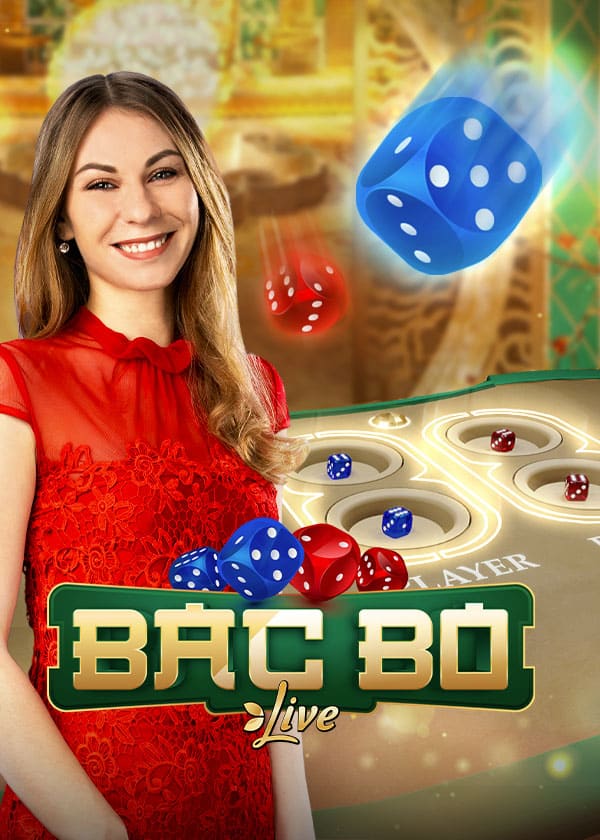
Four dice sit in individual automatic shakers. Two dice form the Player total and two form the Banker total, and the ordinary two-dice sums are compared, the larger final sum winning. The dice stop at different moments, but settlement waits for all four; a partial displayed lead is not the outcome. Equal sums produce a Tie, and the official page says tie payment depends on the tied total, so no single uniform tie figure applies. This is neither Baccarat’s cards nor its last-digit scoring.
Picture Player showing 3 and 5 for 8 while Banker shows 6 and 3 for 9. Once all four dice have stopped, Banker’s 9 beats Player’s 8. A comparison made while either side still has an unsettled die remains incomplete. Evolution’s Bac Bo page describes the format.
Dragon Tiger Card Ranks
Eight 52-card decks without jokers serve this table, one card going to the Dragon position and one to Tiger. Ace counts 1, Jack 11, Queen 12 and King 13; the higher rank wins and equal ranks make a Tie. Main Dragon and Tiger wins pay 1:1, a tie returns half the main stake, and the Tie itself pays 8:1 on this page. Big means 8 or higher and Small means 6 or lower, with 7 belonging to neither. Odd/even and red/black are separate single-card observations, not the main higher-card result.
Take Dragon Jack against Tiger 9. Jack ranks 11, so Dragon wins the main comparison. The Jack has an odd rank; its red or black label depends on its suit. A Tiger 7 would sit outside both Big and Small, showing that the side groups do not cover every rank. SA Gaming’s Dragon Tiger rules give these values.
Lightning Dragon Tiger Multipliers
Eight 52-card decks are used, Ace low and King high, with one card dealt to each side. After betting closes, a randomly selected Lightning Suit receives a 2x to 8x multiplier. This published product adds a 20% fee to the total bet, a difference belonging to this independent product alone. An eligible winning hand’s matching Lightning Card multiplies its win, and ties with two matching Lightning Cards multiply again. The highest-card comparison and the qualifying-multiplier condition are separate parts of settlement.
Suppose diamonds are chosen at 4x and the winning card is a heart. The hand still wins on rank, but no bonus applies, because the multiplier waits on suit rather than on the comparison alone. A diamond winner in the same round would collect the 4x, so two identical rank outcomes can settle differently depending on which suit the winning card carries. Evolution’s Lightning Dragon Tiger page explains the multiplier.
Super Sic Bo Random Multipliers
Three regular dice, each 1 to 6, drive this table. Small covers 4 to 10 and Big covers 11 to 17; Small, Big, Odd and Even all lose to triples. After betting ends, zero to several spots are randomly chosen for multipliers up to 1000x. A multiplier matters only if the player’s chosen spot also wins the dice outcome. Double pays the same when two or three dice show the chosen number, and single-number payment rises with the count of appearances.
Say a 4x marker sits on a spot that loses the roll: the marker changes nothing, and the losing position settles as a plain loss. The same marker on a winning spot would multiply that win. Because the markers appear after betting closes and only on some rounds, the dice outcome and the highlight are two separate conditions that must both fall the right way. Evolution’s Super Sic Bo page sets out the condition.
Each table rewards close reading of scoring before the cards or dice fall. For reel mechanics, see Melbet Slots; for Indian card formats, see Melbet Indian Card Games; for phone presentation, see Melbet Mobile Reading.
Independent source-catalogue artwork
These references identify source-catalogue games; availability and variants depend on the service.